

The drug
What mebufotenin is, and the two drugs made from it
Mebufotenin is 5-MeO-DMT (5-methoxy-N,N-dimethyltryptamine), a short-acting psychedelic. Two companies have tested it for treatment-resistant depression, by two different routes.
- BPL-003 is a nasal spray of mebufotenin benzoate. It was developed by Beckley Psytech, part of AtaiBeckley, and is now owned by Eli Lilly, which calls it “its lead investigational program for treatment-resistant depression.”
- GH001 is an inhaled form, developed by GH Research.
- How it acts. It works on the 5-HT1A and 5-HT2A serotonin receptors. After the nasal spray, its effects peak at 8 to 15 minutes and return to baseline after 45 to 60 minutes, Medical Republic reports, citing the JAMA paper’s background.
Status
Where mebufotenin stands as of November 11, 2026
As of November 11, 2026, ClinicalTrials.gov lists no Phase 3 trial of BPL-003 or GH001, and neither drug is FDA-approved.
- Phase 3 work. In its quarterly report filed August 11, 2026, AtaiBeckley told the SEC that BPL-003 Phase 3 activities in treatment-resistant depression were initiated in the second quarter of 2026 (Form 10-Q). No Phase 3 trial is registered on ClinicalTrials.gov yet.
- Not approved. AtaiBeckley calls BPL-003 “an investigational product” that “has not been approved by the FDA” (March 3, 2026).
- Schedule I. 5-MeO-DMT is a Schedule I controlled substance under federal law (21 CFR 1308.11). The terms of Lilly’s purchase include a payment that depends on “U.S. regulatory approval and DEA rescheduling of BPL-003” (Form 8-K).
- BPL-003. FDA Breakthrough Therapy designation in October 2025 (Psychiatric Times). An end-of-Phase 2 meeting with the FDA, announced March 3, 2026. Owned by Eli Lilly since September 11, 2026.
- Timing. AtaiBeckley expected Phase 3 results in “early 2029” (May 12, 2026), before the Lilly purchase. Approval is years away.
- GH001. The FDA lifted its clinical hold on January 5, 2026, and in July 2026 said GH001’s manufacturing and device plans “appear Phase 3 ready” (GH Research).
The full dated timeline is further down this page.
Plain English
Words you will see in these trials
- MADRS. A depression rating scale scored from 0 to 60. Higher means more severe.
- Response. The MADRS score fell by at least half.
- Remission. The MADRS score fell to 10 or less: few symptoms left.
- Placebo. A look-alike with no active drug, so results can be compared fairly.
- Low-dose comparison. A very small dose of the same drug, used instead of a placebo. BPL-003’s trial used 0.3 mg.
- Adverse event. Any health problem reported after dosing, whether or not the drug caused it.
- Open-label. Everyone knows what they were given, and there is no comparison group.
Side by side
BPL-003 and GH001 compared
The two programs used different routes, comparison groups and time points, so their headline numbers cannot be compared directly.
| Question | BPL-003 (nasal spray) | GH001 (inhaled) | Sources |
|---|---|---|---|
| How it is given | Nasal spray of mebufotenin benzoate: one spray into one nostril, given by a trained clinician | Inhaled, as up to 3 increasing doses (6 mg, 12 mg, 18 mg) in a single day | BPL-003 · GH001 |
| Who develops it now | Eli Lilly, since it completed its purchase of AtaiBeckley on September 11, 2026 | GH Research | BPL-003 · GH001 |
| Main trial so far | Phase 2b, 193 people analysed at 38 sites in Australia, Europe and the US (NCT05870540) | Phase 2b, 81 people enrolled at sites in Europe: Czechia, Germany, Ireland, the Netherlands, Poland and Spain (NCT05800860) | BPL-003 · GH001 |
| Compared with | A low 0.3 mg dose of the same drug, not a placebo | A placebo | BPL-003 · GH001 |
| Headline result | Day 29: 34.8% (8 mg) and 34.2% (12 mg) responded, against 12.2%; 26% and 18% in remission, against 8% | Day 8: 57.5% in remission, against 0% with placebo | BPL-003 · GH001 |
| Ready to go home | Within 2 hours for 85% (8 mg) and 78% (12 mg); the protocol still required a 4-hour stay | Within 1 hour for 99% (company-reported) | BPL-003 · GH001 |
| Published in a journal? | Yes: JAMA, October 26, 2026 | Yes: JAMA Psychiatry, March 25, 2026 | BPL-003 · GH001 |
| FDA status | Not approved. Breakthrough Therapy designation, October 2025 | Not approved. FDA clinical hold lifted January 5, 2026 | BPL-003 · GH001 |
| Phase 3 | Phase 3 activities initiated in the second quarter of 2026 (AtaiBeckley 10-Q, August 2026); results expected early 2029 (May 2026). None listed on ClinicalTrials.gov | Targeted to start in 2026 (GH Research, August 2026). None listed on ClinicalTrials.gov | BPL-003 · GH001 · GH001 |
Different designs, comparison groups and time points: this is not a head-to-head comparison. Each row links its BPL-003 and GH001 sources, all read November 11, 2026. GH001 figures are as reported by GH Research.
The JAMA trial
BPL-003: one nasal spray, tested in 193 people
A single spray of BPL-003 beat a low 0.3 mg dose on response and remission at day 29, and the gap was still there at day 57.


Who took part. The trial, published in JAMA on October 26, 2026 (PubMed record), randomized 196 people and analysed 193.
- Adults aged 18 to 75 with moderate to severe major depression.
- Not helped by 2 to 5 antidepressant trials in the current episode.
- Average age 41; 59.1% women.
- 38 sites in Australia, Germany, Poland, Spain, the UK and the US (Medical Republic).
- On average 13.4 years with depression and 2.3 antidepressants that had not worked.
How it was run. A Phase 2b, randomized, double-blind trial (NCT05870540), funded by Beckley Psytech, an AtaiBeckley company.
- People stopped their antidepressants under supervision before dosing. The drug was given alone.
- Each person got one dose: 8 mg (46 people), 12 mg (73) or 0.3 mg (74). The 0.3 mg dose was the comparison, not a placebo.
- A trained clinician gave one spray into one nostril.
- Everyone stayed more than 4 hours afterwards, with psychological support.
| Result | 8 mg | 12 mg | 0.3 mg (comparison) | Source |
|---|---|---|---|---|
| Responded at day 29 | 34.8% | 34.2% | 12.2% | HMP |
| In remission at day 29 | 26% | 18% | 8% | JAMA |
| Responded at day 57 | 28.3% | 31.5% | 10.8% | Medical Republic |
| In remission at day 57 | 26.1% | 19.3% | 8.1% | Medical Republic |
| Had any adverse event | 76.1% | 84.9% | 73.0% | HMP |
| Average drop on the MADRS by day 29 (difference from 0.3 mg) | 12.5 points (6.2 more; P = .003) | 11.1 points (5.3 more; P = .003) | 5.5 points | JAMA |
Day 29 response is HMP’s figure; the JAMA summary rounds it to 35%, 34% and 12%. Both active doses did better than 0.3 mg from day 2 through day 57, HMP reports.
Ready to go home in about 2 hours, kept for 4. Within 2 hours, 85% of the 8 mg group and 78% of the 12 mg group were judged ready for discharge (HMP). The average was 113.7 minutes with 8 mg, 117.3 with 12 mg and 106.2 with 0.3 mg (Medical Republic). The protocol required a 4-hour stay, so no one actually left before 4 hours.
Side effects. Almost all adverse events were mild or moderate.
- 99.7% of adverse events were mild or moderate (HMP).
- Most common across all participants: headache (29.5%), nausea (23.8%) and pain where the spray went in (15.5%) (Medical Republic).
- One person on 12 mg had two severe panic attacks, judged to be caused by the treatment (HMP).
- No suicidal behaviour was recorded. Suicidal thoughts reported in the active groups came without intent, and only in people with a history of them (Medical Republic).
Company figures
A second dose: open-label results with no comparison group
These figures come from the company, were not published in a journal, and had no comparison group.
- 107 of 126 eligible people took a second 12 mg dose, 8 weeks after the first (AtaiBeckley, November 10, 2025).
- Of the 60 who had an active dose first, 63% were responding and 48% were in remission 8 weeks after the second dose (week 16).
- One serious drug-related adverse event came 8 days after the second dose. It resolved with in-patient monitoring.
The inhaled version
GH001: tested against a placebo
In GH001’s Phase 2b trial, 57.5% of people were in remission at day 8, against 0% with placebo, according to GH Research.
- The trial. NCT05800860 enrolled 81 people with treatment-resistant depression. ClinicalTrials.gov lists it as completed and quadruple-masked: participants and staff were not told who got what.
- Published. In JAMA Psychiatry on March 25, 2026 (GH Research).
- Six months, open-label. 73% were in remission at 6 months in the open-label extension, after about 4 treatments on average. There was no comparison group (GH Research).
- Short sessions. GH Research reports a median psychoactive experience of about 11 minutes, 99% ready for discharge within 1 hour, and no treatment-related serious adverse events.
- U.S. status. The FDA had put GH001’s U.S. application on clinical hold, which stops trials under it. It lifted the hold on January 5, 2026. In July 2026 the FDA said GH001’s manufacturing and device plans “appear Phase 3 ready,” and GH Research is aiming to start its pivotal program in 2026 (August 6, 2026).
Read with care
What the JAMA editorial and the authors warn about
An editorial in the same issue of JAMA found the results notable, but said “the antidepressant effect was incomplete,” as quoted by the Hindustan Times.
The editorial, by Chittaranjan Andrade, praised the 8-week effect of a single dose and how soon people were ready to leave. It also raised these points, as PsyPost summarises them:
- The average participant improved by only about 30%.
- Response and remission rates fell below those typically seen with ketamine and ECT.
- Higher or rising doses, or a course of treatments, may be worth testing.
- Participants were not markedly treatment-resistant: the median was two antidepressants that had not worked.
- The trial could not test the effect on suicidal thinking.
The trial’s own limitations, from the JAMA summary and PsyPost:
- Most participants and on-site clinicians correctly guessed which group they were in.
- The 8 mg group was smaller, after a change to how people were randomized.
- Everyone had to stop antidepressants first, so results may not apply to people who cannot.
- Nearly 90% of participants were white.
- The psychological support was not tested on its own.
- Employees of the sponsor helped design the trial, analyse it and decide to publish.
Who the results do not cover
People the BPL-003 trial left out
If any of these apply to you, the trial results say nothing about how you would respond.
- PTSD, bipolar disorder or a psychotic disorder.
- Any personality disorder.
- A parent, sibling or child with schizophrenia or bipolar disorder.
- Suicidal thoughts with intent in the past year.
- Ketamine or ECT that did not work before. Many people reading about treatment-resistant depression have tried one of these.
- Anyone younger than 18 or older than 75, or unable to stop their antidepressants.
Exclusions as reported by PsyPost; age range and antidepressant washout from the JAMA summary and Medical Republic.
A psychiatrist’s view
Dr. Savatta: impressive, if it holds up
Dr. Salvatore G. Savatta, a psychiatrist and this site’s Clinical Review Lead, set out his view in an email on November 11, 2026, when he asked for this page:
- More treatments are still needed. Every existing treatment has people it does not help, and some people cannot have some treatments for medical reasons.
- The single-dose response rates are very impressive, if they hold up in larger placebo-controlled studies.
The “if” matters. BPL-003 was compared with a low 0.3 mg dose, not a placebo. Its Phase 3 trials would compare it with a placebo. AtaiBeckley says that work began in the second quarter of 2026, but no Phase 3 trial is listed yet.
Why more options matter. In the BPL-003 trial itself, about 65% of the 8 mg group had not responded by day 29. And some current treatments are ruled out for some people:
- The FDA label rules SPRAVATO out for people with an aneurysm or aneurysmal blood vessel disease, an arteriovenous malformation, a past bleed inside the brain, or an allergy to esketamine or ketamine (Labyrinth Psychiatry Group).
- TMS is generally not used for people with metal or electronic devices in or near the head, such as deep brain stimulators, cochlear implants or aneurysm clips (Labyrinth Psychiatry Group).
Dr. Savatta is affiliated with Labyrinth Psychiatry Group. His view is taken from his email; his review of this page is pending.
The timeline
Where approval stands, date by date
The latest milestone is the JAMA paper of October 26, 2026. No Phase 3 trial is listed yet, and there is no FDA decision date.
| Date | What happened | Source |
|---|---|---|
| October 2025 | The FDA grants BPL-003 Breakthrough Therapy designation for treatment-resistant depression. It is not an approval. | Psychiatric Times |
| November 10, 2025 | AtaiBeckley reports company topline results after a second, open-label dose of BPL-003. | AtaiBeckley |
| January 5, 2026 | The FDA lifts the clinical hold it had placed on GH001's U.S. application. | GH Research |
| March 3, 2026 | After an end-of-Phase 2 meeting, AtaiBeckley says the FDA “indicated support” for Phase 3 trials of BPL-003. | AtaiBeckley |
| March 25, 2026 | GH001's placebo-controlled Phase 2b trial is published in JAMA Psychiatry. | GH Research |
| May 12, 2026 | AtaiBeckley says Phase 3 will start in the second quarter of 2026, with topline results expected in “early 2029.” | SEC |
| July 2026 | The FDA tells GH Research that GH001's manufacturing and device plans “appear Phase 3 ready.” | GH Research |
| August 11, 2026 | In its quarterly report to the SEC, AtaiBeckley says BPL-003 Phase 3 activities in treatment-resistant depression were initiated in the second quarter of 2026. | SEC |
| September 11, 2026 | Eli Lilly completes its purchase of AtaiBeckley. BPL-003 is now a Lilly program; Lilly's release gives no Phase 3 start date. | Lilly |
| October 26, 2026 | JAMA publishes the BPL-003 Phase 2b trial, with an editorial in the same issue. | JAMA |
| November 11, 2026 | ClinicalTrials.gov lists no Phase 3 trial of BPL-003 or GH001. | ClinicalTrials.gov |
| Not set | An FDA decision on either drug. No date exists: Phase 3 results for BPL-003 were expected in early 2029. | SEC |
What BPL-003’s Phase 3 would look like. AtaiBeckley described two trials after its March 2026 FDA meeting:
- ReConnection-1: about 350 people, one dose of 8 mg, 4 mg or placebo.
- ReConnection-2: two doses, on day 1 and day 15, of 8 mg or placebo.
- Both: 12 weeks with a placebo group, then a 52-week open-label extension. The main measure is the change in MADRS score at week 4.
A realistic timeline. By AtaiBeckley’s own estimate in May 2026, before the Lilly purchase, Phase 3 results would come in early 2029. That puts any approval not before 2029 at the earliest, by the company’s own timeline. In its August 11, 2026 quarterly report, AtaiBeckley told the SEC that Phase 3 activities had been initiated in the second quarter of 2026. Lilly has not given a Phase 3 start date.
What ClinicalTrials.gov shows. Searches on November 11, 2026 for BPL-003, GH001, mebufotenin and 5-MeO-DMT found no Phase 3 trial of either drug. The BPL-003 records are the completed JAMA trial (NCT05870540), an open-label Phase 2 study listed as recruiting (NCT05660642), a Phase 1 study (NCT05347849) and a Phase 2 study in alcohol use disorder (NCT05674929).
Do not self-treat
Toad secretion and retreats are not the medicine in these trials
The trials used measured doses, screened people first and watched them for hours. Retreat use does none of that.
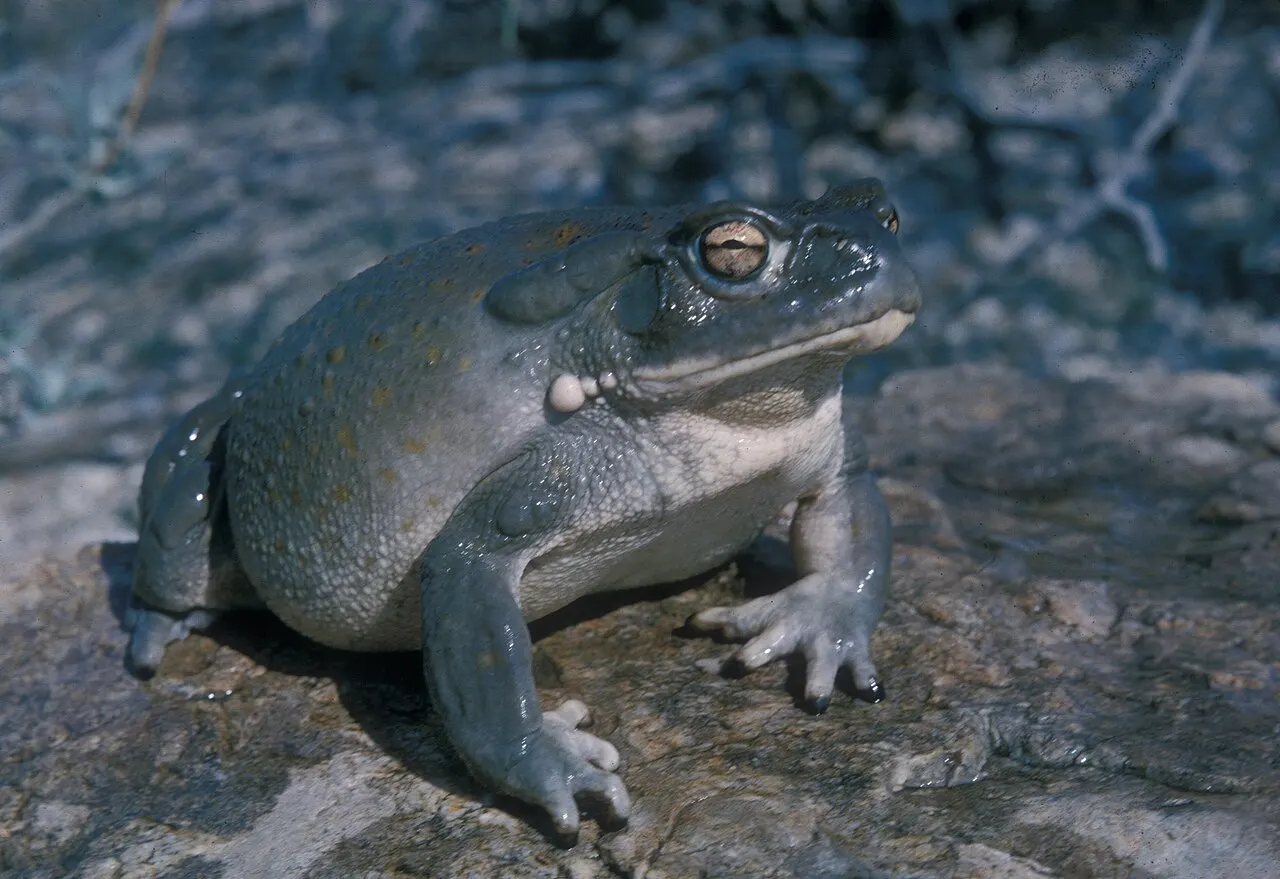

- 5-MeO-DMT occurs in some plants and in the secretion of at least one toad species (Medical Republic).
- Outside trials, people smoke dried toad secretion at retreats without medical screening, the Hindustan Times reported on October 31, 2026.
- That is not BPL-003 or GH001, and the trial results do not apply to it. 5-MeO-DMT is a Schedule I controlled substance under federal law (21 CFR 1308.11).
Your options today
If you have treatment-resistant depression now
Mebufotenin is years away from any FDA decision. These pages on this site cover the options to discuss with a psychiatrist now.
In New Jersey. Labyrinth Psychiatry Group explains what the trial means for New Jersey patients, including what 5-MeO-DMT’s legal status means there.
If you hope to join a trial. Read each study’s rules on ClinicalTrials.gov with your psychiatrist before you change treatment. The BPL-003 trial required people to stop antidepressants first, and it excluded anyone whose ketamine or ECT had not worked.
Printable
Questions for your psychiatrist about mebufotenin
Write the answers down. Keep health details for the visit, not for a web form.
- Does my history fit treatment-resistant depression, and what have I not tried yet?
- Would anything in my history have kept me out of the BPL-003 trial (PTSD, bipolar disorder, psychosis, a personality disorder, a family history of schizophrenia or bipolar disorder, or ketamine or ECT that did not work)?
- Is any treatment I am considering ruled out for me for a medical reason?
- Which option fits me now, and would starting it affect joining a trial later?
- Is there a study I could qualify for, and would I have to stop my antidepressant first?
- What should I do if my depression gets worse while I wait?
Common questions
Mebufotenin, BPL-003 and GH001: questions people ask
What is mebufotenin?
Mebufotenin is another name for 5-MeO-DMT (5-methoxy-N,N-dimethyltryptamine), a short-acting psychedelic. Two drugs based on it are being studied for treatment-resistant depression: BPL-003, a nasal spray of mebufotenin benzoate, and GH001, which is inhaled.
Is mebufotenin a psychedelic?
Yes. Mebufotenin (5-MeO-DMT) is a short-acting psychedelic. With the BPL-003 nasal spray, most people in the JAMA trial were judged ready to leave the clinic within 2 hours (85% on 8 mg, 78% on 12 mg), although the study kept everyone at least 4 hours. GH Research reports a median experience of about 11 minutes with inhaled GH001.
Is mebufotenin FDA approved?
No. AtaiBeckley calls BPL-003 “an investigational product” that “has not been approved by the FDA.” GH001 is still preparing for Phase 3. As of November 11, 2026, ClinicalTrials.gov lists no Phase 3 trial of BPL-003 or GH001.
What phase is BPL-003 in?
BPL-003 has finished a Phase 2b trial, published in JAMA on October 26, 2026. In March 2026 the FDA indicated support for Phase 3, in May 2026 AtaiBeckley said Phase 3 would start in the second quarter of 2026, with results expected in early 2029, and in its August 11, 2026 quarterly report it told the SEC that Phase 3 activities had been initiated in that quarter. As of November 11, 2026, no Phase 3 trial of BPL-003 is listed on ClinicalTrials.gov.
Who owns BPL-003?
Eli Lilly. Lilly completed its purchase of AtaiBeckley on September 11, 2026, and calls BPL-003 “its lead investigational program for treatment-resistant depression.” Lilly's release gives no Phase 3 start date.
How well did the BPL-003 nasal spray work?
At day 29, 34.8% of people given 8 mg and 34.2% given 12 mg had responded, against 12.2% given a low 0.3 mg dose. In remission: 26% and 18%, against 8%. The comparison was a low dose of the same drug, not a placebo, and an editorial in JAMA noted that the average participant improved by only about 30%.
What is the difference between BPL-003 and GH001?
Both are mebufotenin. BPL-003 is a nasal spray of mebufotenin benzoate, now owned by Eli Lilly, and was compared with a low 0.3 mg dose in its Phase 2b trial. GH001 is inhaled, made by GH Research, and was compared with a placebo. The trials used different designs and time points, so their results cannot be compared head to head.
What did the GH001 trial find?
GH001 was compared with a placebo. At day 8, 57.5% of people given GH001 were in remission, against 0% given placebo, according to GH Research. The results were published in JAMA Psychiatry in March 2026.
Is mebufotenin (5-MeO-DMT) legal?
Mebufotenin is 5-MeO-DMT, a Schedule I controlled substance under federal law (21 CFR 1308.11, read November 11, 2026). The terms of Lilly's purchase of AtaiBeckley include a payment that depends on “U.S. regulatory approval and DEA rescheduling of BPL-003.” Toad secretion used at retreats is not the drug tested in these trials.
Can I get mebufotenin for depression now?
No mebufotenin product is FDA-approved, so outside a research study there is no approved way to receive it. Advanced Depression Care is an education site and does not treat patients. This page is not an offer of mebufotenin from Labyrinth Psychiatry Group or any clinic.
Sources
Where every figure on this page comes from
- Feifel D, Seynaeve M, Cubała WJ, and colleagues. Single intranasal administration of the psychedelic mebufotenin for treatment-resistant depression: a randomized clinical trial. JAMA, published online October 26, 2026 (research summary; doi:10.1001/jama.2026.18380)
- HMP Global Learning Network, Primary Care Psychiatry, November 2, 2026: Mebufotenin shows rapid antidepressant effects in Phase 2b trial
- PsyPost, October 31, 2026: the trial's limitations and exclusions, and the same-issue JAMA editorial by Chittaranjan Andrade (doi:10.1001/jama.2026.17333)
- AtaiBeckley Form 10-Q, filed with the SEC August 11, 2026 (quarter ended June 30, 2026): BPL-003 Phase 3 activities in treatment-resistant depression initiated in the second quarter of 2026
- PubMed record 42931733 for the JAMA BPL-003 trial (Feifel and colleagues, October 26, 2026; PMC13711228)
- JAMA Psychiatry, 2026: GH001 vs placebo in patients with treatment-resistant depression (doi:10.1001/jamapsychiatry.2026.0096)
- Labyrinth Psychiatry Group, November 11, 2026: 5-MeO-DMT (mebufotenin) for depression, what the new trial means for New Jersey patients
- PLOS One, November 10, 2025: Luccioni and colleagues, Diet and chemical defenses of the Sonoran Desert toad (the only animal known to secrete 5-MeO-DMT)
- Hindustan Times, October 31, 2026: toad secretion smoked at retreats without medical screening; Dr. Chittaranjan Andrade on the trial
- Medical Republic, November 5, 2026: day 57 results, time to discharge readiness, side effects and the drug's background, from the JAMA paper
- ClinicalTrials.gov NCT05870540: BPL-003 in treatment-resistant depression (Phase 2, completed)
- AtaiBeckley, November 10, 2025: topline results after a second, open-label dose of BPL-003
- Psychiatric Times: BPL-003 for treatment-resistant depression (Breakthrough Therapy designation, October 2025)
- AtaiBeckley, March 3, 2026: end-of-Phase 2 meeting with the FDA and the planned Phase 3 trials
- AtaiBeckley, May 12, 2026: first quarter 2026 results (SEC exhibit 99.1), Phase 3 start and readout timing
- Eli Lilly and Company, September 11, 2026: Lilly completes acquisition of AtaiBeckley
- AtaiBeckley Form 8-K, September 11, 2026: completion of the Lilly merger and the contingent payment terms
- GH Research, March 5, 2026: fourth quarter and full year 2025 results (SEC exhibit 99.1), GH001 Phase 2b results
- GH Research, March 25, 2026: GH001 Phase 2b results published in JAMA Psychiatry (doi:10.1001/jamapsychiatry.2026.0096)
- GH Research, January 5, 2026: FDA lifts the clinical hold on GH001
- GH Research, August 6, 2026: second quarter 2026 results (FDA feedback and pivotal program timing)
- ClinicalTrials.gov NCT05800860: GH001 in treatment-resistant depression (Phase 2, completed)
- ClinicalTrials.gov: all studies matching BPL-003 (searched November 11, 2026)
- ClinicalTrials.gov: all studies matching GH001 (searched November 11, 2026)
- ClinicalTrials.gov NCT05660642: open-label Phase 2 study of BPL-003 (recruiting on November 11, 2026)
- 21 CFR 1308.11(d)(15), Schedule I hallucinogenic substances: 5-methoxy-N,N-dimethyltryptamine, DEA code 7431 (eCFR, read November 11, 2026)
- Drug Enforcement Administration: controlled substances, alphabetical order (read November 11, 2026)
- Labyrinth Psychiatry Group: SPRAVATO (esketamine), when it is not an option (read November 11, 2026)
- Labyrinth Psychiatry Group: TMS therapy, when it is not an option (read November 11, 2026)
Every source was read November 11, 2026. Company figures are labelled as company figures. Trial numbers are group results and do not predict any one person’s response. This page does not recommend mebufotenin or any other treatment for a particular person.